Your Evening Wind-Down Ritual: A Light Recipe, a Gentle Walk, and Calming Music

Thursday evening can feel like a small doorway. The busiest part of the week is behind you, but the day may still be moving through your thoughts.
A gentle wind-down ritual can help create a little space between finishing your eating window and settling into sleep. Not as another routine to perfect. Not as a strict list of things to complete. Just a familiar sequence of small choices that helps you return to yourself.
You might prepare something light while your eating window is still open, take a short walk, make a cup of herbal tea, or put on music that asks nothing from you. You might do all of these, or choose one.
The aim is simple. More awareness. Less overwhelm.
1. Begin with a soft landing
When the evening arrives, it can be easy to reach for a snack simply because the day has been long. Sometimes you are genuinely hungry. Sometimes you are thirsty, tired, distracted, or looking for a moment of comfort.
Mindful eating begins with noticing the difference without judgment.
If your eating window is still open and a light bite feels supportive, make it an intentional one. Sit somewhere comfortable. Put your phone aside. Notice the colors, textures, temperature, and flavor. A few unhurried minutes can feel very different from eating while standing in the kitchen or scrolling through a screen.
If your eating window has closed, you can still pause and check in. A glass of water, a warm herbal tea, or a few quiet breaths may help you understand what you need next.
Intermittent fasting can offer structure for people who appreciate a clear rhythm, and the potential benefits of intermittent fasting are often discussed alongside meal timing, awareness, and consistency. Still, there is no single schedule that suits everyone. Your routine deserves to fit the life you actually live.
For more ideas, explore our guide to mindful eating while intermittent fasting.
2. Make a light evening bowl
This simple yogurt bowl works well as a small meal or light bite when your eating window is still open. It is fresh, soothing, and easy to adjust.
Chamomile berry yogurt bowl
Ingredients
- ¾ cup plain Greek yogurt or unsweetened plant-based yogurt
- ½ cup fresh or thawed berries
- 1 tablespoon sliced almonds
- 1 teaspoon chia seeds, if desired
- A small drizzle of honey, if desired
- Cinnamon or lemon zest for a little brightness
- A cup of chamomile tea to serve
Method
Spoon the yogurt into a small bowl. Add the berries, almonds, and chia seeds. Finish with a light sprinkle of cinnamon or lemon zest.
Take a moment before the first bite. Notice the soft yogurt, the cool berries, and the gentle crunch of the almonds. Eat at a pace that feels comfortable, stopping when the bowl feels like enough.
The recipe is only a starting point. You could use pumpkin seeds instead of almonds, add sliced pear, or choose rooibos tea instead of chamomile. The useful part is the pause. A small meal becomes a chance to listen rather than a reason to measure yourself.
If you are managing a health condition, taking medication, pregnant or breastfeeding, or considering intermittent fasting for weight loss, it is worth speaking with a qualified healthcare professional about what approach is appropriate for you.

3. Take an easy walk
After your meal, or as the light begins to soften, a short walk can help mark the transition from the day into the evening.
Think 10 to 15 minutes. An easy pace. A nearby path, quiet street, garden, or simply a gentle loop around your neighborhood.
This is not a workout to complete. There is no distance to reach and no step count to chase. Let your attention rest on ordinary details. The temperature of the air. The sound of leaves. The feeling of your feet meeting the ground.
If you prefer to stay indoors, a few relaxed laps through your home or some gentle stretching can offer a similar change of pace. The movement matters less than the invitation to shift environments and let the day become a little quieter.
Nourish’s activity log gives you a place to record walks, stretching, yoga, breathwork, or meditation. You can capture movement that supports you without turning the evening into a performance.

4. Let music lower the volume
When you return, dim the lights if that feels comfortable. Choose a quiet playlist and let it play in the background while you change clothes, prepare tea, or tidy one small area.
Instrumental music, soft piano, ambient sounds, or familiar acoustic tracks can all work. The best choice is the one that feels calming rather than stimulating.
Try placing your phone across the room once the music begins. You do not need to keep choosing the next song. A prepared playlist can remove one more decision from the evening.
The goal is not to create a perfect atmosphere. It is simply to make the room feel a little less connected to the pace of the day.
A few minutes without bright screens or constant updates may also make it easier to notice how you are feeling. According to guidance from the Sleep Foundation, a consistent, relaxing bedtime routine can support better sleep habits.
5. Prepare a warm herbal tea
A caffeine-free herbal tea can become a gentle signal that your eating window is complete and the evening is moving toward rest.
Choose chamomile for its soft, familiar flavor. Peppermint can feel fresh and light. Rooibos offers a naturally sweet, rounded taste without caffeine. Make a small mug and drink it slowly.
As you sip, notice whether you are actually hungry or whether you are tired, thirsty, tense, or simply used to having something in your hands at this time of night. There is no wrong answer. Awareness is useful even when it does not lead to an immediate change.
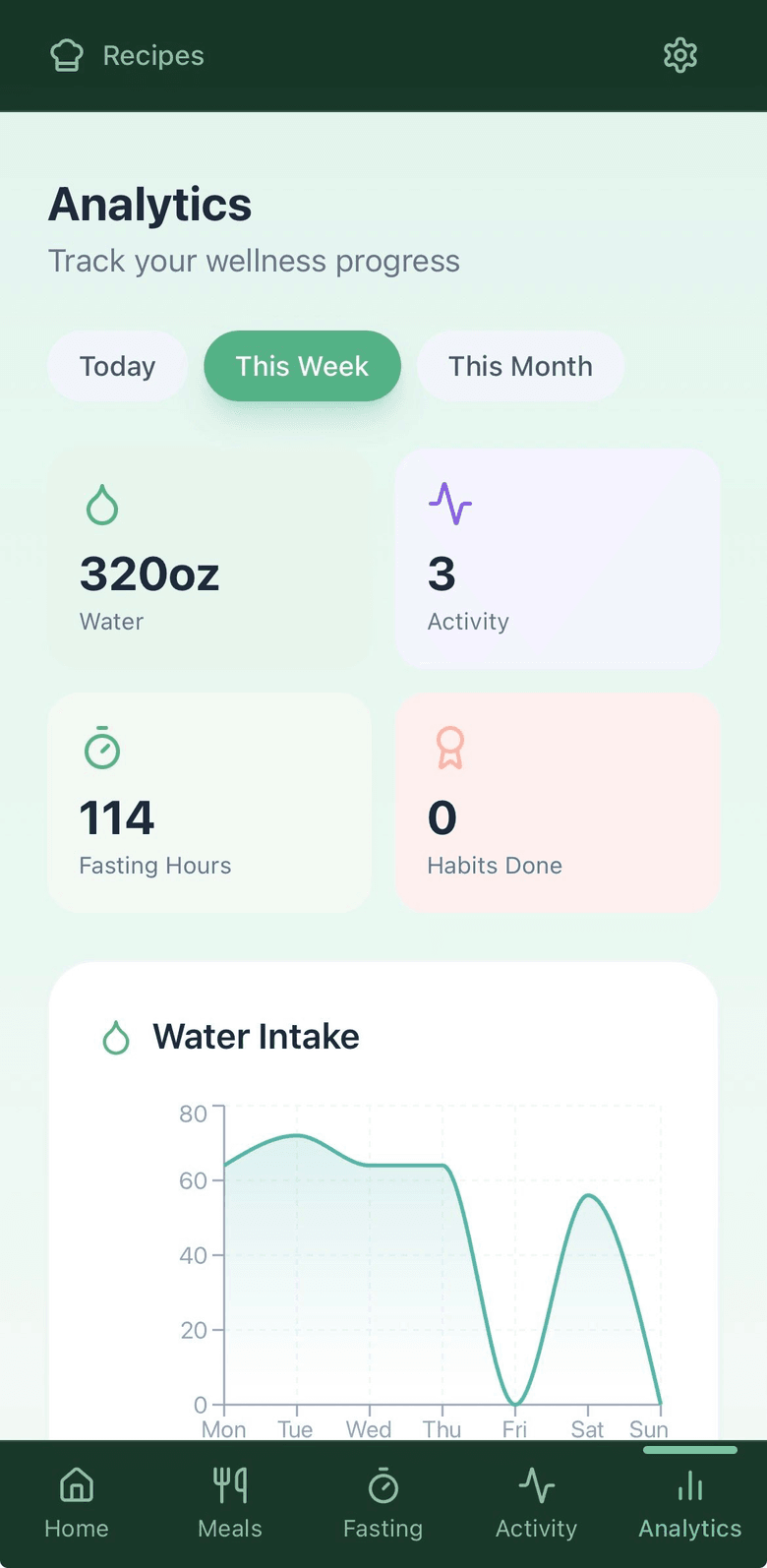
Your evening water can be easy to overlook, especially when the day has been busy. Logging water before bed in a water tracker app like Nourish can help you see whether you have had enough to drink earlier in the day. It may also help you distinguish thirst from the feeling that you need another snack.
Sip comfortably rather than trying to catch up all at once. Your sleep matters, too.
6. Reflect without reviewing everything
Before bed, take two or three minutes for a simple reflection.
You might write:
- One thing that felt nourishing today.
- One moment when you noticed what you needed.
- One small choice that could make tomorrow feel easier.
There is no need to write a full journal entry. A few words are enough. You are not creating a report card. You are giving the day a place to land.
You could also make a brief note about your evening hunger, energy, hydration, or mood. Over time, these observations may reveal patterns. Perhaps late-day busyness makes it harder to drink water. Perhaps a more satisfying meal earlier in your eating window changes how the evening feels. Perhaps a walk helps you move away from habitual snacking.
The pattern, not the noise.
7. Prepare tomorrow gently
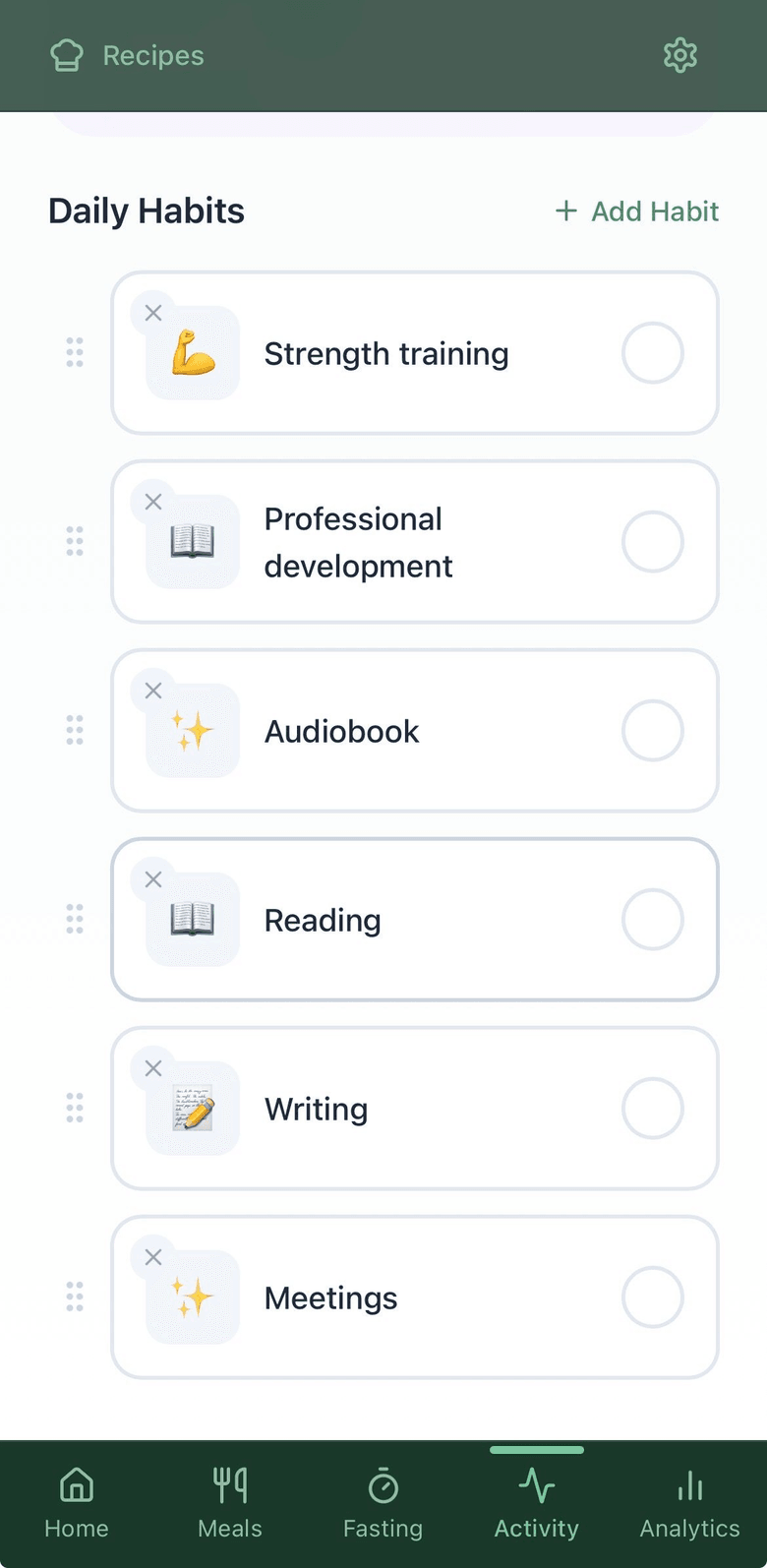
Before sleep, choose one or two healthy daily habits to make visible for tomorrow.
Fill a water glass or bottle. Decide when you might take a short walk. Add a simple breakfast or lunch idea to your notes. Set out comfortable clothes. If you use fasting as part of your routine, choose a schedule that feels realistic rather than forcing a plan that does not fit the next day.
Nourish can support this process as a flexible habit tracker app. Add a wind-down habit, tea, journaling, hydration, or a screen-free music break. Check it off when it happens, and return whenever it feels useful. A pause does not erase the routine.
The app’s meal logging and visual food picker can also help you remember what you ate without turning the evening into detailed bookkeeping. Over the course of a week, Nourish Insights can help you notice your evening patterns, including hydration, meals, activity, and habits.
A rhythm you can return to
A calmer evening does not require a complicated plan.
It might look like a light bowl while your eating window is open, followed by a 10-minute walk. It might be herbal tea and quiet music. It might be water, a few lines in a journal, and an early night.
Some evenings will feel organized. Others will not. Your routine can change with your energy, schedule, preferences, and needs. That flexibility is part of making it sustainable.
Choose one small ritual for tonight. Let it be enough.
Nourish is a wellness tracking tool and is not intended to diagnose, treat, cure, or prevent any disease. Consult a healthcare professional before starting any fasting, nutrition, or exercise program.